

The Wolverine era (2000–2017)
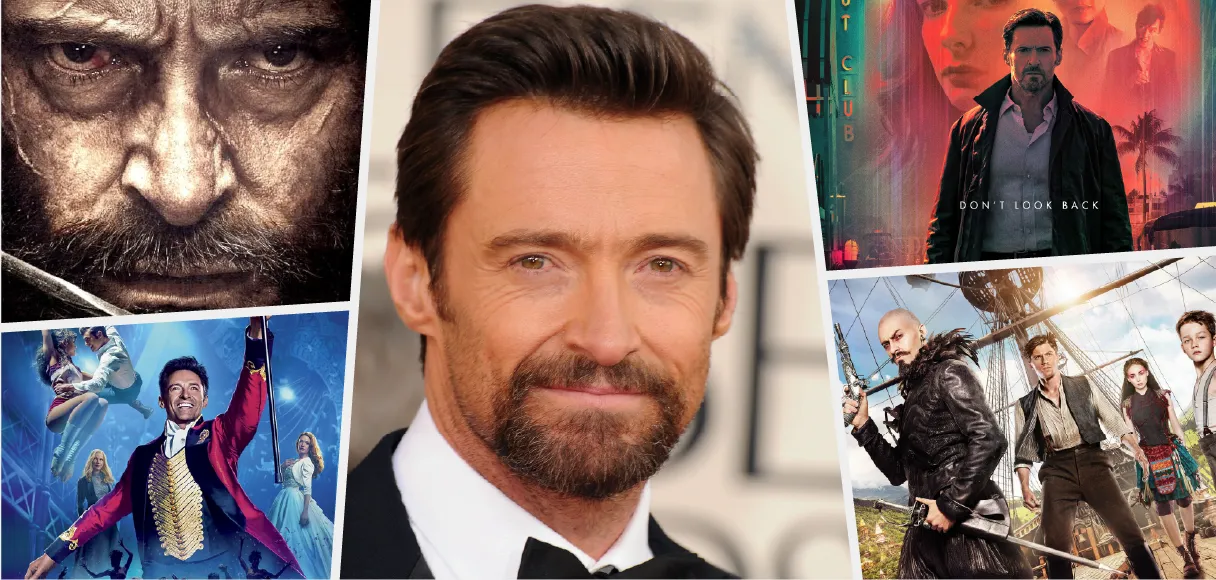
Cast at the last minute when Dougray Scott dropped out of X-Men (2000) due to scheduling conflicts on Mission: Impossible 2, Jackman played Wolverine in nine films across seventeen years. It’s one of the longer runs any actor has had with a single character in Hollywood history — longer than Daniel Craig’s Bond, longer than Robert Downey Jr.’s Iron Man, longer than anyone in the MCU to date. The arc closes with Logan (2017), widely considered one of the best superhero films ever made. During the same period, Jackman built a parallel prestige career: The Prestige (2006) with Christopher Nolan, Prisoners (2013) with Denis Villeneuve, and Les Misérables (2012) with Tom Hooper. The Wolverine commercial work funded the prestige work. That’s not a criticism — that’s just how movie stardom works.
The post-Wolverine period (2018–2023)
After Logan, Jackman announced he was done with the character. The Greatest Showman (December 2017) had already become a cultural phenomenon, pointing toward a post-superhero career built on his actual first love: musical theatre. The subsequent five years produced a mixed bag. There were genuine wins — a celebrated Broadway revival of The Music Man, critical praise for his HBO drama Bad Education (2019). And then there were the misses: Reminiscence (2021) and The Son (2022), films that asked Jackman to be a movie star without giving him the infrastructure that movie stars need to succeed.
The Wolverine return (2024–)
Deadpool & Wolverine (July 2024) became the highest-grossing R-rated film of all time and the first MCU film to cross $1 billion since Spider-Man: No Way Home (2021). The “I’m done with Wolverine” framing of Logan was retroactively complicated, which is either a betrayal of the character’s perfect ending or a testament to how well the MCU solved the structural problem of bringing him back — depending on which way you want to argue it. As of late 2025, Jackman has publicly hedged on whether he’ll appear in Avengers: Doomsday (May 2026). He has, in the parlance of our times, never said never again.
The Five Tests Every Hugh Jackman Movie Has to Pass
A Hugh Jackman film succeeds or fails on five questions. The framework below — the Five Tests of a Star Vehicle — is what every hit on this page passes and every miss fails. The pattern is consistent enough that the scorecard predicts the result more reliably than the budget, the director’s reputation, or the studio behind it.
Test 1: The Role-Fit Test
Does the role leverage what Jackman is uniquely good at?
Jackman’s strengths break into three modes: physical intensity (Wolverine, Real Steel), melancholic gravity (Prisoners, The Prestige), and musical-theatre virtuosity (Les Misérables, The Greatest Showman). Roles that exploit at least one of these pass the test. Logan asked Jackman to do all three simultaneously — a violent, sad man carrying the elegiac weight of a stage performance. Pan asked him to play a cartoonish villain in fake teeth. The role-fit gap is exactly what this test is designed to catch.
Test 2: The Director-Match Test
Does the filmmaker know what to do with Jackman?
The directors who have used him best — James Mangold (The Wolverine, Logan), Christopher Nolan (The Prestige), Denis Villeneuve (Prisoners), Tom Hooper (Les Misérables), Michael Gracey (The Greatest Showman) — built their films around his particular intensity rather than trying to fit him into a shape he doesn’t naturally occupy. Directors who have failed him — Gavin Hood (X-Men Origins), Joe Wright (Pan), Lisa Joy (Reminiscence) were either working with the wrong vehicle for him entirely, or were so focused on their own creative agenda that Jackman’s actual strengths became secondary. The result, in those cases, is a movie star performing in a film that doesn’t need a movie star.
Test 3: The Tone Test
Does the film commit to one coherent tone?
Jackman is an actor of register. He plays violent stoicism, grand showmanship, or quiet anguish — but he needs the film to pick one and mean it. The films that do (Logan‘s elegiac-western register, The Greatest Showman‘s unapologetic musical spectacle, Les Misérables‘ full-throated operatic grief) give him somewhere to land. The films that don’t — Pan‘s prequel-fantasy-musical-action confusion chief among them — leave him with nothing to anchor to, which means no performance can save them.
Test 4: The Franchise-Context Test
If the film is part of a franchise or built on IP, does the parent context support or undermine the project?
Logan succeeded because Fox gave James Mangold an R rating and a closed ending — the franchise gave Jackman ownership over the character’s exit. X-Men Origins: Wolverine failed because Fox rushed the film into existence to capitalize on Wolverine’s popularity before anyone had figured out what the movie actually was, resulting in a production so troubled that the workprint leaked online a month before release. Same franchise. Same character. Same actor. Two completely different results. The variable was never Jackman.
Test 5: The Audience-Fit Test
Is there a real audience for this film at this budget?
Logan‘s $97M budget for an R-rated Wolverine farewell matched its audience. Pan‘s $150M budget for an unwanted Peter Pan prequel didn’t match any audience that existed in 2015. Reminiscence‘s $68M for a Lisa Joy memory-noir had no audience at any scale. The test is whether the film’s economic ambition aligned with the people who would actually show up for it. When the answer is no, no amount of star power closes the gap.
Hugh Jackman’s 5 Greatest Hits, Ranked
The five films below all passed at least four of the Five Tests of a Star Vehicle. Two passed all five. They span twenty years and three genres — superhero, musical, prestige drama — but they share more than their box office results. Each one knew what Jackman was for and built around it.
#1. Logan (2017) — Peak Hit, 5/5
Director: James Mangold
Budget: $97M
Worldwide: $619M (6.4× return)
RT: 94%
Scorecard: Role-Fit | Director-Match | Tone | Franchise-Context | Audience-Fit
The Pitch: Near-future. An aging, broken Logan is running out of road. He’s caring for a frail, ailing Charles Xavier somewhere on the Texas border, hiding from a world that has moved past mutants. A young girl shows up. Wolverine has to protect her. James Mangold pitches it as a Western — not metaphorically, but structurally. Shane is literally playing on screen during the film’s third act. The studio bets $97M that audiences will watch a superhero movie that doesn’t really want to be a superhero movie.
The Result: $619M global. 94% on Rotten Tomatoes. The first superhero film ever nominated for an Oscar in the screenplay category. Seventeen years of accumulated audience investment in Jackman as Wolverine finds its payoff in a film that finally trusted them to follow the character somewhere genuinely dark. Logan is still frequently cited as the high-water mark of the entire X-Men franchise — not just Jackman’s run, the whole thing.
Why It Worked: Logan passed all five tests because everybody involved agreed on what the film was before they started making it. It’s a film about dying. About what it costs to keep living past the point where living is easy. The R rating wasn’t a marketing stunt — it let the violence have real weight, which let the elegy have real weight, which let seventeen years of built-up goodwill between Jackman and an audience pay off in a way that felt genuinely earned. Mangold knew Jackman from The Wolverine (2013), understood exactly what the actor could carry emotionally, and built the whole film around that specific capacity. No version of Logan works with someone else in the role. No version works without Mangold.
#2. Deadpool & Wolverine (2024) — Peak Hit, 5/5
Director: Shawn Levy
Budget: $200M
Worldwide: $1.34B (6.7× return)
RT: 78%
Scorecard: Role-Fit | Director-Match | Tone | Franchise-Context | Audience-Fit
The Pitch: The MCU needs a fix. Wolverine or a variant of him teams up with Deadpool in a multiverse-rescue mission. The conceit is straightforward: the multiverse exists, Logan’s ending is canon, and this is a different Wolverine. Ryan Reynolds and Jackman have been teasing this for years. The audience has been waiting for it almost as long.
The Result: The highest-grossing R-rated film of all time. The first MCU film to cross $1 billion since Spider-Man: No Way Home in 2021. A cultural event in a post-pandemic landscape where those had become genuinely rare. The film retroactively complicated Logan‘s “this is goodbye” framing and somehow made the case that the goodbye was exactly the thing that made the return work — because the audience understood the weight of what they were watching.
Why It Worked: The franchise context solved the one structural problem the entire project had: how to bring Jackman back without invalidating Logan? The multiverse premise is the MCU infrastructure that gets criticized constantly, but here it did exactly the job it was designed to do. Once that problem was solved, everything else followed naturally. Levy and Reynolds had an established shorthand from their Free Guy and The Adam Project collaboration, and they understood that the assignment was joy, not redemption, not reinvention, just two extremely committed actors having enormous fun inside a framework the audience had already bought into. Jackman, for his part, found a comic register he’d never fully gotten to play in the Wolverine films, which gave the performance texture it wouldn’t have had otherwise.
#3. The Greatest Showman (2017) — Hit, 4/5
Director: Michael Gracey
Budget: $84M
Worldwide: $459M (5.5× return)
RT: 56%
Scorecard: Role-Fit | Director-Match | Tone | Audience-Fit
The Pitch: A musical biopic of P.T. Barnum, the American circus impresario and devoted practitioner of the hype cycle. Jackman plays him as a dreamer, a showman, a flawed man who built something extraordinary from borrowed money and sheer force of personality. The film is not interested in historical accuracy. It is very interesting to hear Hugh Jackman singing at full volume.
The Result: The Greatest Showman opened modestly in December 2017, and then something unusual happened: it didn’t leave. It ran through January. It ran through February. It ran into March. The soundtrack went quadruple platinum. The film crossed $400M globally on word-of-mouth alone, driven by audiences who couldn’t stop rewatching it — not because the script was extraordinary, but because Jackman in full song-and-dance mode is a thing the market wants and rarely gets in cinema. The commercial trajectory, slow start, and sustained tail, is genuinely unusual and points to real audience enthusiasm rather than opening-weekend marketing noise.
Why It Worked: This is the cleanest example on the list of the Role-Fit Tes,t doing all the work. The script is conventional. The historical accuracy is loose. The critics scored it at 56% and weren’t wrong about the craft. None of it mattered because the Role-Fit Test passed so decisively that everything else became secondary. The framing here is important: acknowledging the 56% RT score honestly doesn’t undermine the entry — it actually makes the commercial result more remarkable. A film critics didn’t particularly love generated $459M and a four-times-platinum soundtrack. That only happens when the audience is responding to something the critics’ framework wasn’t built to measure.
#4. Les Misérables (2012) — Hit, 4/5
Director: Tom Hooper
Budget: $61M
Worldwide: $442M (7.2× return)
RT: 69%
Scorecard: Role-Fit | Director-Match | Tone | Audience-Fit
The Pitch: Victor Hugo’s Les Misérables, adapted from the beloved stage musical and shot with a radical creative choice: the cast would sing live on set rather than lip-syncing to pre-recorded tracks. Jackman plays Jean Valjean, a former convict who spends the film’s three-hour runtime trying to outrun his past. Russell Crowe plays Inspector Javert. Anne Hathaway plays Fantine and has approximately twelve minutes of screen time and an Oscar.
The Result: $442M global on a $61M budget, the kind of multiplier that makes studio finance departments emotional. Eight Academy Award nominations. Jackman’s only Oscar nomination to date was for Best Actor. Hathaway won Best Supporting Actress. The film cemented Tom Hooper as a prestige director and demonstrated, fairly conclusively, that a sung-through Hollywood film could work as event cinema if you cast it correctly.
Why It Worked: Tom Hooper’s decision to record vocals live on set is the choice that made Jackman’s casting the entire point of the movie. Live singing, as opposed to studio-polished dubbing, is brutally exposing — there is nowhere to hide, and the performance can’t be cleaned up in post. Jackman could carry it because he’d been doing exactly this on Broadway for years. Most film actors working at his level could not have. The Role-Fit Test here is the whole pitch: cast Hugh Jackman as Jean Valjean and let him do the thing he trained to do. Few films are this clear-eyed about why they’re making the casting choices they are.
#5. The Prestige (2006) — Hit, 4/5
Director: Christopher Nolan
Budget: $40M
Worldwide: $109M (2.7× return)
RT: 76%
Scorecard: Role-Fit | Director-Match | Tone | Audience-Fit
The Pitch: Two rival Victorian-era stage magicians, Robert Angier (Jackman) and Alfred Borden (Christian Bale), destroy each other over a single trick. The film is structured like a magic act: it tells you exactly what it’s doing and then does it anyway, and you’re still astonished. Nolan wrote the script with his brother Jonathan, adapted from Christopher Priest’s novel, and came to it fresh off Batman Begins.
The Result: $109M global on a $40M budget — a solid return for a prestige thriller with no IP. The critical reputation has grown considerably since release. It’s now regularly cited as one of Nolan’s best films and one of Jackman’s strongest performances, which is a pattern that tends to happen when a film is genuinely good, and the audience catches up to it slowly.
Why It Worked: The Prestige is where Jackman first demonstrated, clearly and without the safety net of the Wolverine franchise, that he could anchor a film for a director with genuine filmmaking ambitions. The rivalry-obsession register — a man who wants to win so badly he loses everything that makes winning worth anything — suited Jackman’s melancholic intensity precisely. Nolan trusted him with structural complexity, gave him a character who is simultaneously sympathetic and culpable, and let the performance do the work the script required. The film’s growing reputation has elevated this entry over time. Its place on this list is partly retrospective. That’s not a caveat; it’s a data point about how good the film actually is.
Hugh Jackman’s 5 Biggest Misses, Ranked
The five films below all failed three or more of the Five Tests of a Star Vehicle. Two failed four. One failed all five. They span fifteen years and represent every era of Jackman’s career — the franchise-context failure of X-Men Origins: Wolverine, the role-fit collapse of Pan, the audience-fit catastrophe of Reminiscence. The pattern is what the analysis section after this one is for.
#1. Pan (2015) — Catastrophic Miss, 1/5
Director: Joe Wright
Budget: $150M
Worldwide: $128M
RT: 26%
Scorecard: None Applicable
The Pitch: A Peter Pan origin story. Young orphan James Hook and young Peter Pan are childhood friends, navigating Neverland together before they become the characters we know. Jackman plays Blackbeard — the villain, not Hook — costumed in fake teeth, a towering wig, and what appears to be a theatrical commitment to making every possible wrong choice simultaneously. The marketing released a clip of Jackman leading a crowd of pirates singing Nirvana’s “Smells Like Teen Spirit.” The internet’s response was not warm.
The Result: Pan lost Warner Bros. an estimated $100 million or more. It scored 26% on Rotten Tomatoes. It grossed $128M on a $150M production budget before you factor in a marketing spend that would have been considerable. It is regularly cited in retrospective industry pieces as one of the most expensive flops of the 2010s, a category that has genuine competition.
Why It Failed: Pan is the only film on this page to fail all five tests, and it fails them without even the courtesy of being interesting about it. The role didn’t suit Jackman — there is no version of “cartoonish pirate villain in fake teeth” that uses his actual strengths. Joe Wright is a legitimately skilled director (Atonement, Pride & Prejudice) who was working so far outside his range that his skill set couldn’t save him. The tone was incoherent at a script level, trying to be a prequel, a fantasy adventure, a musical, and an origin story simultaneously, which meant it was none of them fully. The franchise context was nonexistent: nobody was waiting for a Peter Pan prequel that recast the villain as the protagonist’s childhood friend. And the audience, predictably, did not exist at any budget level, let alone $150M.
#2. Movie 43 (2013) — Catastrophic Miss, 0/5
Director: Various (anthology)
Budget: $6M
Worldwide: $32.4M
RT: 5%
Scorecard: None Applicable
The Pitch: A sketch-comedy anthology from the producers of There’s Something About Mary, with a different director for each segment and a cast list that reads like someone won a bet — Hugh Jackman, Kate Winslet, Halle Berry, Richard Gere, Emma Stone, Anna Faris, Gerard Butler, Naomi Watts. The connective tissue between the sketches is a loose framing device. The comedy is, by design, crude, shocking, and willing to go places mainstream comedy wouldn’t normally go.
The Result: 5% on Rotten Tomatoes, which is among the lowest scores ever recorded for a wide-release studio film. Chicago Sun-Times critic Richard Roeper famously called it ‘the Citizen Kane of awful.’ The film has since achieved a kind of cult notoriety — the sort of thing that gets discussed at industry dinners as a cautionary tale about how a project with that many famous names attached got made and released. Jackman and several other cast members have been asked about it in subsequent interviews and have expressed, in varying degrees of diplomatic language, the sentiment that they wish they hadn’t.
Why It Failed: The Jackman segment fails every applicable test. The role asked him to perform one extended crude visual joke — the kind of thing that might land in thirty seconds and collapse over five minutes. There was no register to play, no character to build, no filmmaker who understood what Jackman brings. His name above the title was casting as audience bait, not as a creative decision. The project itself had no coherent tone to commit to and no audience that needed it to exist at any scale. It’s the zero out of five precisely because there was nothing here to salvage.
#3. X-Men Origins: Wolverine (2009) — Catastrophic Miss, 1/5
Director: Gavin Hood
Budget: $150M
Worldwide: $373M
RT: 38%
Scorecard: Role-Fit
The Pitch: The Wolverine origin story that the X-Men franchise had been building toward since 2000. Logan’s past, his relationship with Victor Creed (Liev Schreiber), and the Weapon X program that bonded adamantium to his skeleton. The film would also introduce a supporting roster that included a pre-Deadpool Wade Wilson, played by Ryan Reynolds in what was supposed to be his big superhero showcase. Everybody knows how that went.
The Result: $373M global, which is commercially profitable in the narrow accounting sense and a reputational and creative disaster in every other sense. The film’s handling of Deadpool — sewing his mouth shut, removing the fourth-wall-breaking humor that makes the character, and adding extra powers that the character doesn’t have — became an industry punchline that Reynolds spent the next seven years methodically correcting. The production was reportedly so troubled that a workprint leaked online a month before the film’s release, which Fox investigated as an FBI matter.
Why It Failed: This entry requires care, because X-Men Origins is on the misses list despite a $373M gross. The verdict is reputational and creative. The film damaged Wolverine’s franchise standing badly enough that The Wolverine (2013) was structured partly as a recovery from it, and the Deadpool property was essentially frozen for years. The franchise-context failure is the defining one: Fox rushed Origins into production to capitalize on Wolverine’s popularity before anyone had developed a story worth telling. Gavin Hood, a capable director (Tsotsi won the Foreign Language Oscar), reportedly clashed with the studio throughout production and was working with material that kept changing around him. Jackman himself passed the Role-Fit Test — his casting as Wolverine was, as always, right. Everything built around that casting failed.
#4. Reminiscence (2021) — Catastrophic Miss, 1/5
Director: Lisa Joy
Budget: $68M
Worldwide: $16M
RT: 37%
Scorecard: Not Applicable
The Pitch: Near-future Miami, flooded by climate change. Nick Bannister (Jackman) runs a business that allows clients to relive their memories in an immersive tank. He falls for a client (Rebecca Ferguson). She disappears. He investigates. Lisa Joy, who co-created Westworld with Jonathan Nolan, makes her solo directorial debut. The film comes out simultaneously in theaters and on HBO Max.
The Result: $14M global theatrical gross. HBO Max streaming numbers were never disclosed, which is the streaming equivalent of a company not issuing a press release about a product launch. The film vanished from cultural conversation within weeks of release — not the kind of slow-burn fate where it gets rediscovered later, but the kind where it simply stops being discussed.
Why It Failed: Reminiscence is the cleanest example of the Audience-Fit Test failing before a single frame is shot. A $68M original high-concept sci-fi noir, released day-and-date on streaming, with no IP, in a pandemic-era theatrical landscape already struggling with attendance. The audience for that specific film at that specific scale did not exist. The Tone Test failed immediately after: the film wanted to be a climate-disaster story, a memory-tech procedural, a neo-noir, and a tragic romance — all at once, which meant it was fully none of them. Jackman in voiceover-noir mode is theoretically in his melancholic wheelhouse, but the script never specified what emotional register the performance was supposed to occupy, so even the role-fit dissolved. Joy’s television sensibility, perfectly calibrated for Westworld‘s serialized structure, didn’t translate to a two-hour feature with a single leading performance at its center.
#5. The Son (2022) — Miss, 2/5
Director: Florian Zeller
Budget: $6M
Worldwide: $1.5M
RT: 28%
Scorecard: Role-Fit
The Pitch: Florian Zeller’s follow-up to his Oscar-winning The Father (2020), the Anthony Hopkins film that earned widespread critical acclaim for its portrayal of dementia from the inside. Here, Jackman plays Peter, a successful man navigating his teenage son’s severe depression while managing a new family and a high-pressure career. Laura Dern plays the boy’s mother. Vanessa Kirby plays the new wife. It should, on paper, work.
The Result: 28% on Rotten Tomatoes. Critics specifically faulted the film’s portrayal of depression as superficial, its handling of the teenager’s storyline as emotionally manipulative rather than empathetic, and its overall construction as a stage play that didn’t make a convincing case for being a film. Jackman’s individual performance was consistently singled out as the film’s most defensible element in an otherwise heavily criticized release.
Why It Failed: The Son is the only entry on the misses list where the Role-Fit Test passed. Jackman did the work. The film around him failed. This matters analytically because it demonstrates the outer limit of what a star vehicle’s star can accomplish: even a strong individual performance can’t carry a project that the audience and critics have collectively decided doesn’t work. Zeller’s translation from stage to screen, which produced the elegant, controlled chamber of The Father, didn’t hold in The Son — the material’s emotional register felt imposed rather than earned, and critics and mental-health advocates were vocal about the film’s handling of depression as a plot device rather than a lived experience. The Audience-Fit Test failed for a different reason than most entries on this list: there was an audience willing to follow Zeller from The Father, but by the time The Son arrived, that audience had been warned off by the critical response.
The Films That Almost Made Either List
Four films sit just outside the main ten — too good to be misses, too uneven to be hits, or too borderline either way. Each scored 2/5 or 3/5 on the Star Vehicle tests. Each is worth knowing about for what it adds to the picture.
Prisoners (2013) — Score: 4/5
Arguably the strongest “almost made the hits list” entry here, and a legitimate case could be made for including it over Les Misérables. Denis Villeneuve directs Jackman as a father who takes justice into his own hands after his daughter is abducted. It’s one of Jackman’s most-praised performances, and Villeneuve’s direction is as controlled and unsettling as anything in his filmography. The reason Les Misérables gets the slot is that the Oscar nomination and the prestige-musical achievement are more central to the specific story of Jackman’s career. Prisoners is, however, excellent, and the oversight should be noted.
The Wolverine (2013) — Score: 3/5
Better than X-Men Origins: Wolverine by a considerable margin, not strong enough to be a hit. Mangold’s first collaboration with Jackman established the director-actor relationship and creative vocabulary that Logan would refine four years later. The Japanese setting gave the film a visual character that the franchise rarely had. The third act loses the thread. Useful context for understanding how Logan got made.
Van Helsing (2004) — Score: 2/5
Grossed $300M on a $160M budget, which makes it commercially successful in the pure sense. Critically dismissed, and not without reason. The interesting case study here is that a film can pass the Audience-Fit Test while failing most of the others — audiences showed up for a Jackman action-monster film in 2004 and got roughly what they came for, even if “what they came for” was limited. A useful illustration that the tests can be split between commercial and creative verdicts.
Australia (2008) — Score: 2/5
Baz Luhrmann and Jackman in an epic romantic adventure — the swing is obvious, and the ambition is real. It didn’t connect critically and only softly connected commercially ($211M on $130M is a modest result for an intended epic). The film is more interesting as a near-miss from a filmmaker who swings big than as a definitive failure. Jackman gives a committed performance inside a film that never quite found its register, which is, fittingly, a pattern visible elsewhere on this page.
What Hugh Jackman’s Career Teaches About Star Vehicles
The pattern across twenty-five years and ten case studies is consistent enough to produce three operating observations, not just about Jackman, but about how movie stars work in general.
-
Star vehicles fail more often from project mismatch than from star failure.
Eight of the ten films on this page passed the Role-Fit Test, meaning Jackman, in his work, did what the film asked of him. The failures clustered around the films, not the performances. The Son failed despite his performance being widely praised. X-Men Origins failed despite its casting being correct. Reminiscence failed despite his full commitment to the material. The actor is rarely the variable. This is worth saying clearly, because the instinct when a film fails is to distribute the blame proportionally among the names above the title. The data here suggests the distribution is usually not proportional.
-
Director-match and tone-commitment are the two tests that correlate most tightly with results.
Every hit passed both. Every catastrophic miss failed both. The Audience-Fit Test predicts the commercial outcome, but Director-Match and Tone predict the creative one — and creative failure in a star vehicle tends to precede commercial failure. A film that doesn’t know what it is can’t market itself. A film that doesn’t leverage its star can’t sell the performance. Both problems start in development, long before anyone is on set.
-
The films that fail the Franchise-Context Test tend to be the most expensive misses.
Pan ($150M). X-Men Origins ($150M). The franchise context fails when a studio rushes a project into production against IP demand that may not actually exist, or builds a film that the franchise cannot support. Both of these failures cost their studios more than $100M each. This pattern extends well beyond Jackman’s filmography — it is an industry-wide problem with expensive IP that his career happens to illustrate with particular clarity.
What Hugh Jackman’s Hits and Misses Tell Us
Hugh Jackman has the most analyzable career of any movie star of his generation — partly because his hits and misses correlate so consistently with the same five tests. The pattern is not a coincidence. A star vehicle either commits to leveraging what the star is for, or it doesn’t, and the films that do tend to succeed across every other variable: budget, genre, era, franchise context. The ones that don’t tend to fail in the same ways, even when the star is doing the work correctly.
The lesson is not Jackman-specific, though his career makes it unusually visible. The Five Tests apply to any star vehicle. The Role-Fit Test is about casting. The Director-Match Test is about creative infrastructure. The Tone Test is about script-level commitment. The Franchise-Context Test is about institutional support. The Audience-Fit Test is about economic honesty. When all five are aligned, the film works. When three or more fail, the film doesn’t — regardless of who’s in it.
The actor is rarely the variable. The film around them usually is.